What Is Mobbing?
- Emanuela Brun
- Jul 13
- 3 min read

Updated: Jul 16
Mobbing (Workplace Bullying): Understanding Its Impact on Mental Health
Many people associate bullying exclusively with school. However, bullying does not end in childhood. It can also occur in professional settings, where it is commonly referred to as mobbing or workplace bullying, significantly affecting employees' mental health, work performance, and overall quality of life.
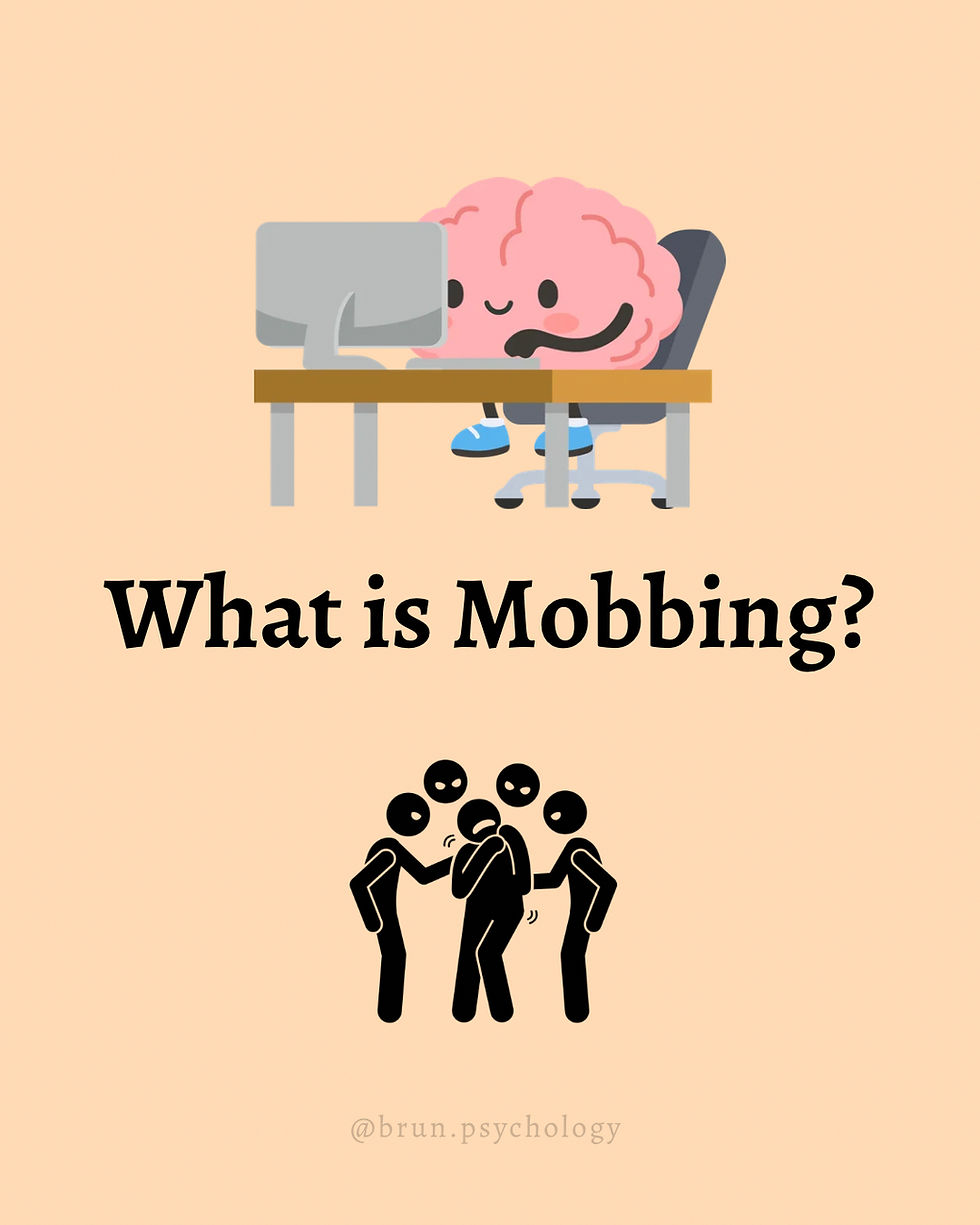
What is mobbing?
Mobbing (workplace bullying) refers to the systematic and repeated psychological harassment or intimidation of an employee. It is not a single disagreement, constructive criticism, or an occasional difficult day at work. Rather, it involves a persistent pattern of behaviours that create a hostile, degrading, and psychologically harmful work environment.
Workplace bullying can come from a manager (vertical bullying), a colleague (horizontal bullying), or even a subordinate (upward bullying).
How does workplace bullying manifest?
Mobbing is not always obvious. It often takes the form of subtle but repeated behaviours, such as:
Constant criticism or belittling remarks.
Public humiliation or embarrassment.
Excluding someone from meetings or important communications.
Spreading rumours or gossip.
Assigning unrealistic workloads or impossible deadlines.
Repeatedly questioning an employee's competence.
Social isolation or deliberately ignoring someone.
Excessive monitoring or micromanagement.
Unjustifiably removing responsibilities or limiting opportunities for growth.
The impact on mental health
Repeated exposure to workplace bullying continuously activates the body's stress response. When this occurs over an extended period, it can affect both mental and physical health.
Common consequences include:
Chronic stress and anxiety.
Reduced self-esteem.
Difficulty concentrating and making decisions.
Sleep disturbances.
Symptoms of depression.
Burnout.
Increased risk of anxiety disorders.
In severe cases, symptoms consistent with post-traumatic stress disorder (PTSD).
Many individuals also experience physical symptoms, including headaches, muscle tension, gastrointestinal problems, persistent fatigue, and elevated blood pressure.
Why do many people remain silent?
One of the greatest challenges surrounding workplace bullying is that many victims never report it.
Common reasons include:
Fear of losing their job.
Fear of retaliation.
Concern that they will not be believed.
Feelings of guilt or self-doubt.
The belief that "this is just how workplaces are."
Over time, individuals may begin to internalise the negative treatment they receive, eventually questioning their own abilities and believing that they are the problem.
What does the research say?
Scientific research consistently identifies workplace bullying as one of the most significant psychosocial hazards in the workplace. Studies have linked prolonged exposure to workplace bullying with higher rates of anxiety, depression, burnout, long-term sickness absence, and reduced job performance.
Additionally, chronic activation of the stress response may negatively affect the immune and cardiovascular systems, increasing the likelihood of psychosomatic symptoms and other stress-related health problems.
What can you do if you experience workplace bullying?
If you believe you are experiencing mobbing:
Recognise that this behaviour is neither normal nor acceptable.
Keep a record of incidents, including dates and any potential witnesses.
Save relevant emails, messages, or other documentation whenever possible.
Speak to someone you trust.
Report the behaviour to Human Resources or the appropriate authority, if it is safe to do so.
Seek support from a mental health professional, especially if the situation is significantly affecting your wellbeing.
The role of organisations
Preventing workplace bullying is not solely the responsibility of the individual employee. Organisations have a responsibility to foster a culture of respect, psychological safety, and zero tolerance for bullying behaviours.
Clear anti-bullying policies, leadership training, confidential reporting procedures, and a workplace culture that encourages open communication are all essential in preventing mobbing and protecting employee wellbeing.
Conclusion
Work should be a place of growth, collaboration, and professional fulfilment—not fear, intimidation, or psychological harm.
Mobbing (workplace bullying) is not a sign of personal weakness, nor is it an inevitable part of working life. It is a serious form of psychological abuse with well-documented consequences for both mental and physical health.
Recognising workplace bullying is the first step toward protecting employees, promoting healthier workplaces, and creating organisational cultures where people can thrive with dignity, respect, and psychological safety.


Comments